RESOLUTION OF DISPUTES OVER SHARED RIGHT OF WAY
1. What is a common path dispute?
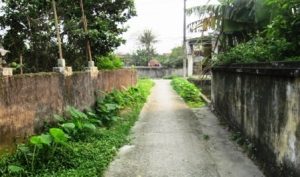
Unlike the “right of way through” (easement), the “common path” is currently not specifically defined in any legal documents. However, a common path can be understood as an area of land carved out for land users to use as access to public transport roads.
A “common path dispute” is a term used to refer to conflicts regarding the opening of a common path or conflicts caused by encroachment or occupation of land between adjacent land users. These are disputes in the field of land law, but few people know that, in essence, these disputes have differences; therefore, the resolution methods also differ.
Disputes regarding the opening of a common path:
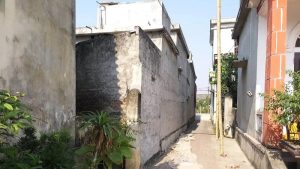
A common path is formed from a land area voluntarily set aside by the outer land user, or by agreement, or transferred to the inner land user to have access to public roads (similar to a right of way through). Alternatively, a common path is created when land users cut a portion of their land, and simultaneously, the common path forms the land-use boundary between adjacent parcels (commonly called a common road or common alley). It can be seen that opening a common path is the right of land users to voluntarily set aside/agree/transfer a portion of land for common use. Thus, this is considered a civil dispute. If the parties choose litigation as the resolution method, they have the right to sue in Court.
Disputes due to land encroachment/occupation between adjacent land users:
Most cases occurring due to the act of encroachment or occupation of land between adjacent land users are, in reality, land disputes. According to Clause 1, Article 29 of the Land Law 2024 and Clause 2, Article 3 of Resolution 04/2017/NQ-HDTP, disputes over a path caused by encroachment between adjacent land users are identified as land disputes (disputes in determining who has the right to use the land).
2. How to resolve common path disputes?
The methods for resolving common path disputes differ between “land disputes” and “disputes related to land.” Specifically, the methods are as follows:
– Mediation of land disputes:
- Self-mediation or mediation at the grassroots level: Clause 1, Article 235 of the Land Law 2024 stipulates: “The State encourages parties to land disputes to self-mediate or resolve through grassroots mediation in accordance with the law on grassroots mediation, commercial mediation, or other mediation mechanisms as prescribed by law.” This method is encouraged by the State, but the result is not mandatory and depends on the goodwill of the parties.
- Mandatory mediation at the Commune-level People’s Committee: Clause 2, Article 235 of the Land Law 2024 stipulates: “Before the competent state agency resolves a land dispute as prescribed in Article 236 of this Law, the disputing parties must conduct mediation at the Commune-level People’s Committee where the disputed land is located.” According to the above regulations, if parties cannot reach an agreement but wish to resolve the dispute, they must submit an application to the People’s Committee of the commune, ward, or town for mediation. Without mediation, they cannot initiate a lawsuit or request the District or Provincial People’s Committee to resolve the matter. Note: Mediation is a mandatory procedure for “land disputes.” This means for disputes related to land (disputes over opening a common path), mediation is not mandatory.
– Requesting the District or Provincial People’s Committee to resolve According to Clause 2, Article 236 of the Land Law 2024, for disputes where the parties do not have a Certificate or any of the land-use rights documents prescribed in Article 137 of the Land Law 2024, the parties may only choose one of two forms of resolution:
- Submit a request for dispute resolution to the competent People’s Committee (if the dispute is between households or individuals, submit to the District-level People’s Committee). If dissatisfied with the decision, parties have the right to complain to the Chairman of the Provincial People’s Committee or initiate a lawsuit in Court under the law on administrative procedures.
- Initiate a lawsuit at the Court where the disputed land is located in accordance with the law on civil procedures.
– Initiating a lawsuit at a competent People’s Court under the law on civil procedures.
Pursuant to Clauses 1 and 2, Article 236 of the Land Law 2024, the following disputes may be sued in the People’s Court:
- Land disputes where parties have a Certificate or one of the documents prescribed in Article 137 of the Land Law.
- Land disputes where parties do not have a Certificate or documents prescribed in Article 137, provided the following conditions are met:
- The plaintiff has the right to sue.
- The dispute falls under the Court’s jurisdiction by case type.
- The dispute has not been previously resolved.
- The dispute has undergone mediation at the Commune-level People’s Committee.
In case you need to resolve a common path dispute but are too busy to attend court, do not know where to start, or are unsure of the procedures, please contact Luat Kim Bang at hotline: 034.540.6523.